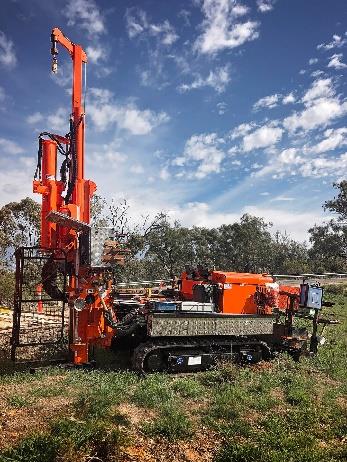
Split Spoon Sampling (SPT)
Split spoon sampling recovers disturbed soil samples from a borehole, usually at the same time as the Standard Penetration Test. The sampler is a thick-walled steel tube, typically 51 mm in outside diameter, that splits lengthwise into two halves. It is attached to drill rods, lowered to the bottom of a cleaned borehole, and driven into the soil by a 63.5 kg hammer, following ASTM D1586 or ISO 22476-3. Once it is withdrawn, the tube is opened so the soil can be logged, photographed and sealed in jars. The samples are used for soil classification, moisture content and grading tests, and the blow counts give an indication of soil strength.
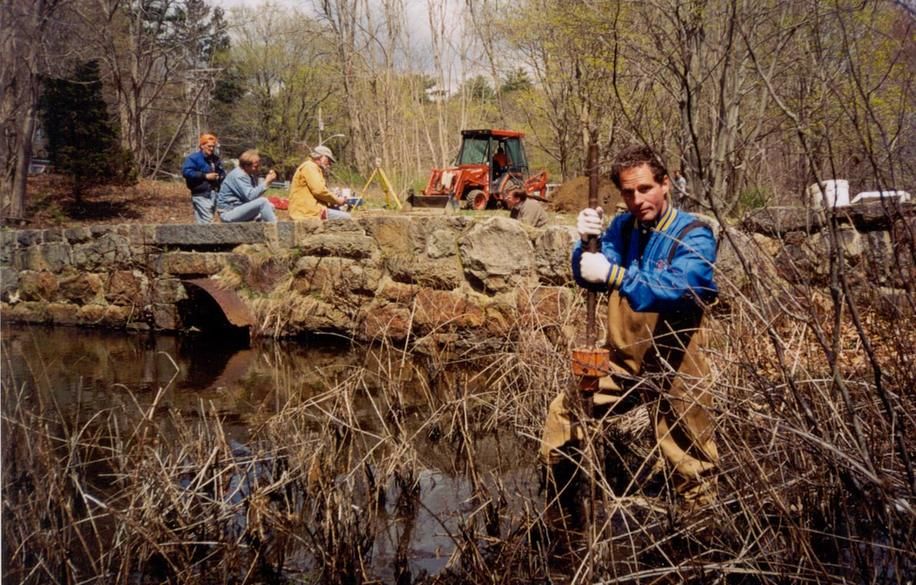
Shelby Tube Sampling
Shelby tube sampling recovers relatively undisturbed samples of soft to firm cohesive soils, such as clays and silts. A Shelby tube is a thin-walled steel or brass tube, commonly about 76 mm in diameter, with a sharpened, slightly inward-bevelled cutting edge. It is attached to drill rods and pushed into the soil at the base of the borehole in one smooth, steady stroke, not hammered, following ASTM D1587. After a short rest, the tube is withdrawn, then sealed with wax and caps to preserve moisture. In the laboratory the sample is extruded for strength, consolidation and permeability testing, which feeds directly into foundation and settlement design.
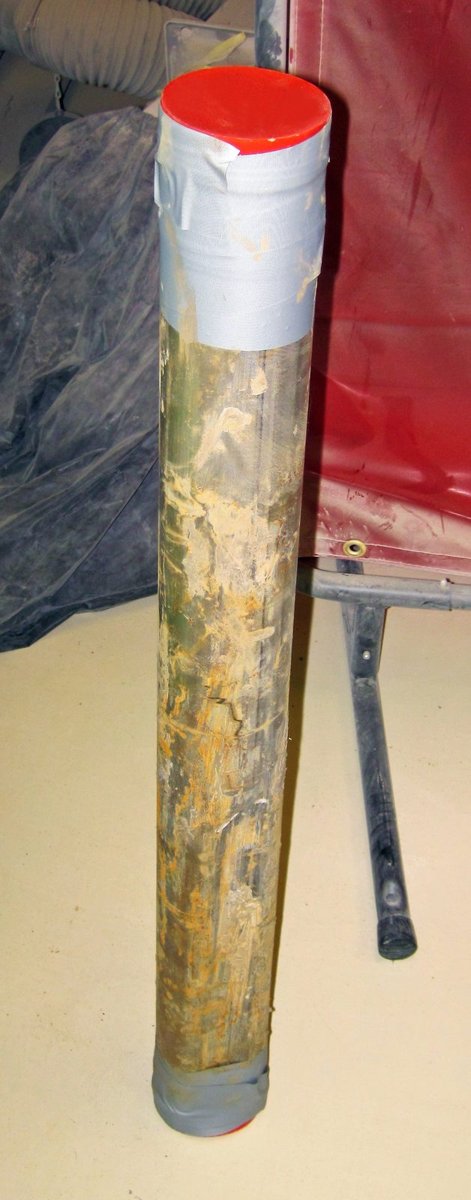
Rock Coring (NX, HQ, PQ)
Rock coring drills a continuous cylinder of rock, called core, from below the soil layers so that the rock mass can be examined directly. A rotary rig turns a diamond-impregnated core bit on a core barrel, usually a double- or triple-tube wireline barrel, while water or drilling fluid cools the bit and flushes cuttings. NX, HQ and PQ are standard size designations that give cores of roughly 55, 63 and 85 mm diameter, with larger sizes giving better recovery in weak or fractured rock. Core is placed in labelled boxes and logged for rock type, total core recovery, RQD and discontinuities. Selected pieces are tested for strength, and the results feed into the design of foundations, slopes and tunnels.
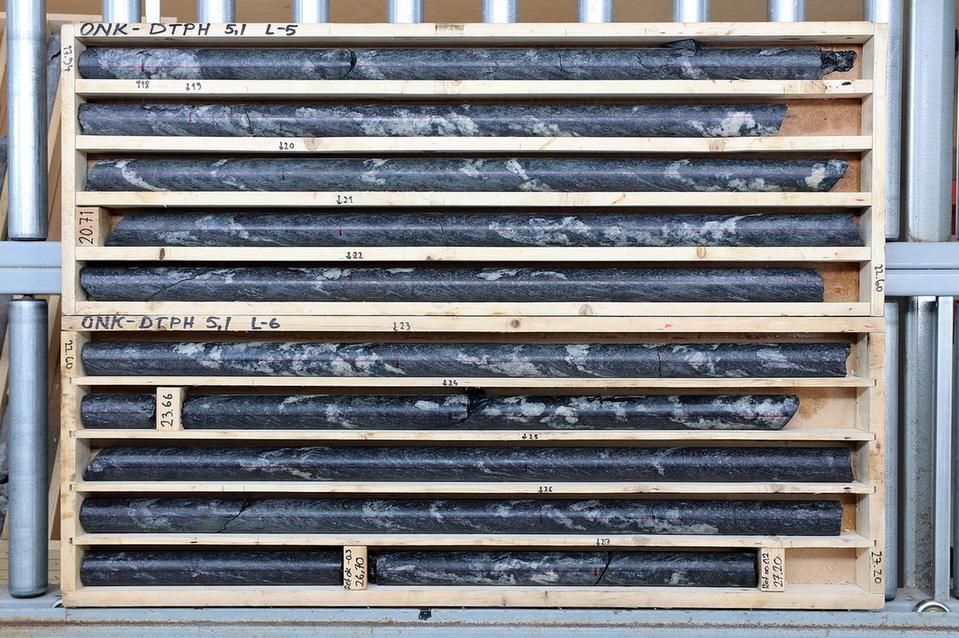
Wash Boring & Rotary Drilling
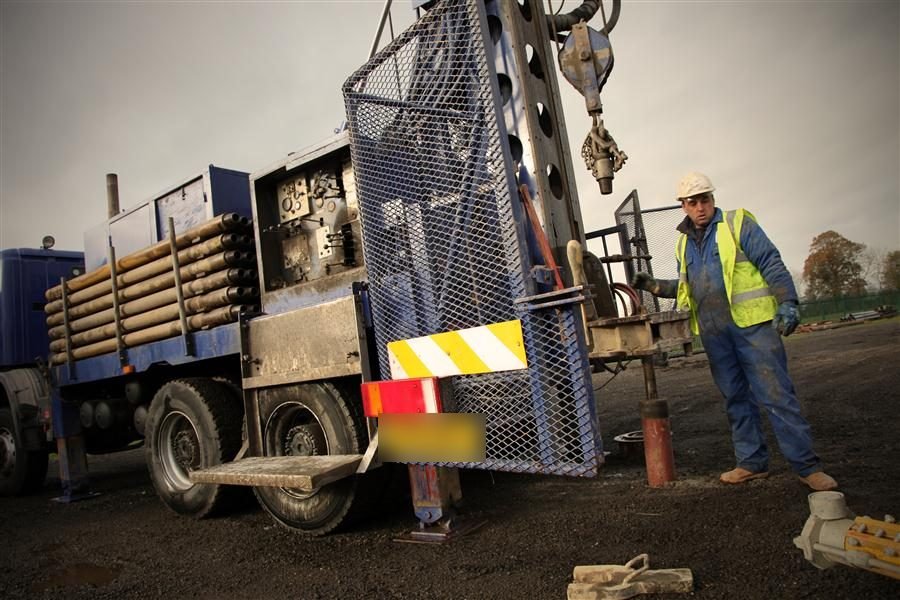
Wash boring and rotary drilling are the main methods for advancing geotechnical boreholes through soil and rock. In wash boring, a chopping bit on hollow drill rods loosens the soil while water or bentonite mud is pumped down the rods, carrying the cuttings up the annulus to the surface. Casing is often used to keep the hole open. Rotary drilling uses a truck- or track-mounted rig to turn the drill string under downward pressure, cutting with drag, tricone or coring bits while circulating fluid. Both methods produce a clean hole in which samples can be taken and in-situ tests such as SPT can be performed at chosen depths.
Auger Drilling
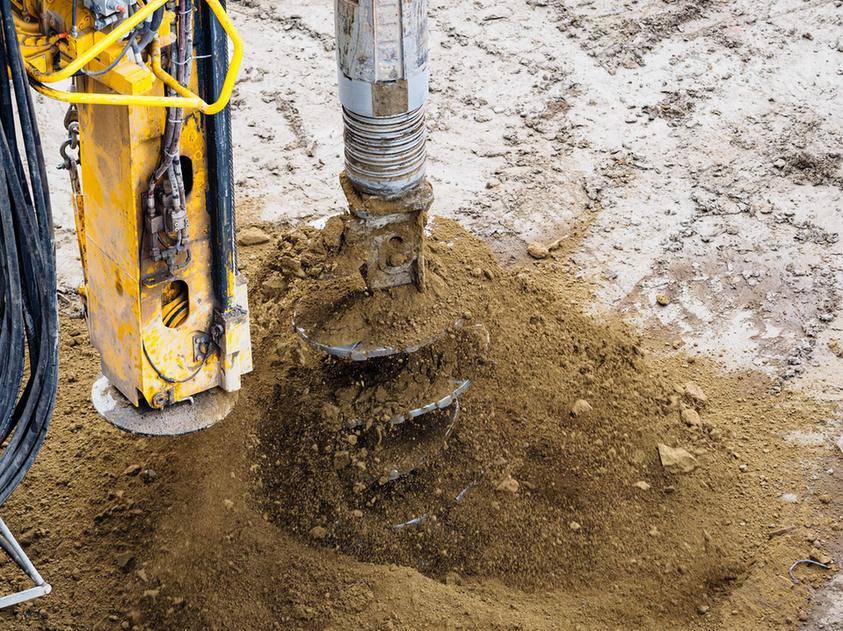
Auger drilling advances a borehole by rotating a helical screw, the auger, into the ground so that soil is lifted out along its flights. Small hand augers suit shallow checks, while rig-mounted continuous-flight or hollow-stem augers reach greater depths in soils that stand up without collapsing. Hollow-stem augers act as temporary casing: samplers, SPT equipment or monitoring wells can be passed down the centre without removing the auger string. Because no drilling fluid is needed, auger drilling is fast, clean and well suited to shallow investigations, road and pavement studies, environmental sampling and the installation of piezometers. It is not suitable for hard rock or for loose soils below the water table.
Drilling up to 200m depth
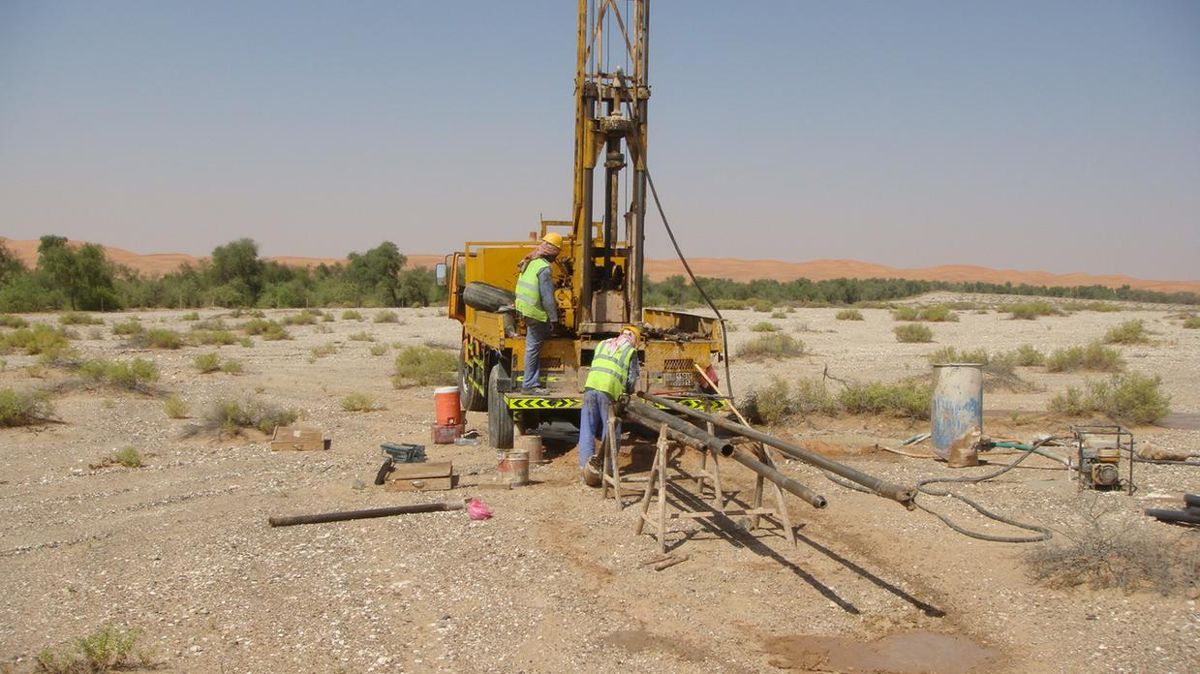
Deep geotechnical drilling extends a borehole well beyond the shallow zone, to depths in the order of 200 metres, to investigate deep foundations, tall buildings, tunnels, dams, deep basements and groundwater conditions. It needs a rotary rig with enough torque, pull-back capacity and mast height to handle long drill strings, together with wireline coring systems, casing to stabilise the hole and controlled drilling-fluid circulation. Over such depths the borehole may pass through soils, gravels and several rock units. Continuous logging, sampling, core recovery and downhole tests at intervals build up a full vertical profile of ground and groundwater conditions for design.
Other capabilities in this service
Back to Geotechnical ServicesDiscuss your project with ATLAS GES
Tell us about your site and requirements, and our team will get back to you.
Get in Touch